
Fashion dispute with a mountain backdrop: Patagonia vs. Pattie Gonia

On January 21, 2026, Patagonia Inc., the owner of one of the world’s most recognizable outdoor brands (Patagonia), filed a lawsuit in California federal court against the artist, activist, and drag queen known as Pattie Gonia.
As part of this legal dispute, Patagonia is seeking nominal damages in the symbolic amount of $1. Furthermore, the company is requesting a judicial declaration that its trademarks protecting the Patagonia brand have been infringed. They are also seeking an injunction to prohibit the artist from taking further actions that could mislead consumers regarding any mutual affiliation, as well as actions leading to so-called trademark dilution.
Background of the dispute
The American outdoor brand Patagonia is renowned for its profound commitment to environmental protection and its consistent, long-standing support for ecological organizations. For years, the company has built its public image by merging commercial success with climate activism, a critique of excessive consumption, and the promotion of pro-environmental movements. At the same time, the company remains highly active in safeguarding its intellectual property rights and its overall brand identity.
Pattie Gonia (Wyn Wiley) is an American drag queen known primarily for her activities related to LGBTQ+ rights and environmental activism. The artist promotes inclusivity within the outdoor community, blending performance and satire with education on climate protection and the accessibility of nature. Her work has been featured and highly recognized by outlets such as National Geographic, which has solidified her position as one of the most prominent figures at the intersection of queer culture, nature, and ecology.
The course of the dispute
In October 2018, the artist began her activities under the pseudonym Pattie Gonia. This play on words clearly references the South American geographical region, while the activist’s public work also draws from the “Patagonia” brand, whose characteristic logo she utilized in a modified form for her own visual identity.
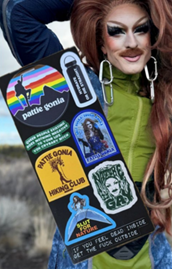
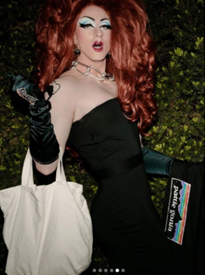
Source: Complaint in Patagonia Inc. v. Pattie Gonia Productions, No. 2:26-cv-00586.
In February 2022, during a collaboration between Pattie Gonia and the company Hydro Flask, the parties reportedly reached an agreement. Under this arrangement, Pattie Gonia agreed not to use her pseudonym for the commercial sale of products.
Despite this, in September 2024, Pattie Gonia registered the domain pattiegoniamerch.com, through which she began selling apparel, specifically T-shirts and sweatshirts branded with the name “Pattie Gonia Hiking Club.”
This action did not meet with approval from Patagonia Inc. The company reportedly contacted the artist, requesting that she cease using the “Pattie Gonia Hiking Club” designation due to its similarity to their brand and the alleged infringement of the company’s established trademark rights.
In response, Pattie Gonia stated that her pseudonym is inspired by the name and natural beauty of the South American geographic region. Simultaneously, the artist suggested that she also wishes to avoid any association with the Patagonia brand due to controversies surrounding the “Lost Arrow” project (a project involving Patagonia’s activities related to the production of military-grade clothing).
Despite the disapproval expressed by the Patagonia brand, on September 21, 2025, the activist filed an application with the United States Patent and Trademark Office for the registration of the trademark “PATTIE GONIA,” covering, among other things, apparel products.
Following the filing of the lawsuit, Patagonia published an official statement on its website. The company emphasized that its goal is not to target artistic freedom, but rather to fulfill the necessity of respecting intellectual property rights and protecting its own brand identity.
Boundaries beyond shared values
The Patagonia company is known for its proactive protection of trademark rights, as it views them as a key element of its brand and a vital tool for protecting its visual identity. Trademark rights allow for control over the context in which a brand is utilized. This enables Patagonia to maintain a consistent image, safeguard the value of its reputation, and prevent situations where the actions of others might weaken its prestige or its image as an ecologically responsible company.
In the case of the dispute with Pattie Gonia, pro-ecological values undoubtedly unite both parties. However, the escalation of the conflict occurred at the moment the artist began selling commercial clothing.
Patagonia argues that the name “Pattie Gonia” is sufficiently similar to its own that it may mislead consumers regarding potential affiliations, infringe upon trademark rights, and dilute the brand’s hard-won reputation. Trademark protection is not limited to the direct copying of logos or products; it also encompasses the use of similar names or motifs that may suggest a false connection to the brand, thereby impacting its reputation and market value.
The symbolic monetary claim of $1 sought by Patagonia can be interpreted in this context as a form of acknowledgment of Pattie Gonia’s creative work. However, the artist’s entry into the same product market could not go unanswered, as it poses a genuine threat to an outdoor brand built over many decades.

