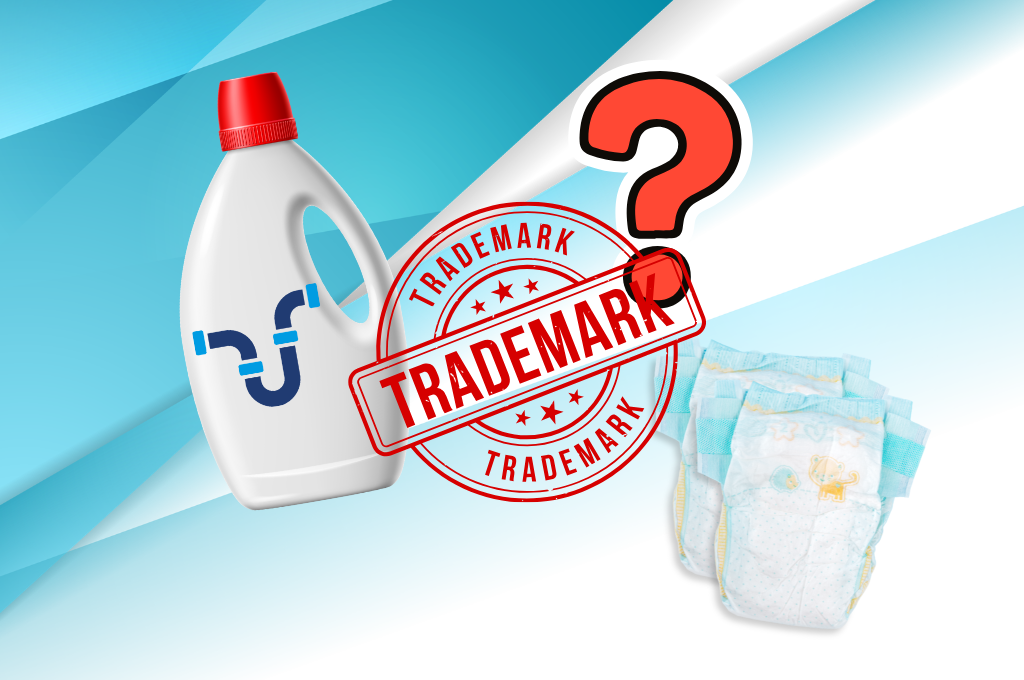
Too Popular to Survive? On the Risks of Trademark Degeneration


Having successfully registered a trademark, many owners assume that the hardest part of the process is over. However, simply placing the ® symbol next to the trademark and paying the renewal fees on time is not enough.
The challenges that lie ahead are very real and they include the need to constantly monitor the market, combat infringement and prevent trademark dilution, which can result in the loss of the trademark’s distinctiveness. This may seem abstract, but a trademark can be lost if it becomes too popular. The phenomenon of trademark dilution, whereby a trademark’s reputation or distinctive character is weakened due to its overuse in various contexts, is closely linked to the phenomenon of trademark degeneration. All trademark owners should be familiar with these concepts and learn how to protect their interests.
When popularity can damage a brand
Trademark degeneration, also known as “genericide”, occurs when a product or marketing name becomes a generic term in common use. This happens when consumers stop perceiving a given designation as a company’s trademark, associated with a single source of origin, and start using it to refer to the entire category of products or services it was registered for. This is often the case when an entity is first to market a given product, as consumers then start to associate it with that particular brand. Paradoxically, the brand’s popularity can diminish its distinctiveness, which in turn has a detrimental effect on its distinctive character.
The degeneration of a trademark may have far-reaching consequences for its owner. When a trademark becomes a generic term, it may be invalidated. According to Article 169(1)(ii) of the Industrial Property Law, the right of protection for a trademark shall also lapse on loss by the trademark of distinctive features for the reason that in consequence of the owner’s acting or negligence it has become, in the course of trade, a customary mark consisting exclusively of elements which may serve, in the course of trade, for indicating, in particular, the kind, quality, quantity, price, intended purpose of the good, the process, time or place of its manufacturing, the composition, function or usability of the good, in respect of the goods for which the trademark has been registered.
Brands that have become “synonymous with the product” – market examples
One of the best-known examples of a trademark that at one point fell into common usage is the trademark of the German company Adidas. In Poland, the term “adidasy” is used to describe most sports shoes, regardless of their brand. Its recognizability, which ultimately led to its becoming a generic term, stemmed primarily from the fact that for many years, the German company’s products were the only sports shoes available on the Polish market. However, the emergence of many competing brands and growing consumer awareness led customers to pay closer attention to the product’s origin, quality, design, and brand authenticity – a shift that has worked in the brand’s favour. Adidas is no longer the “default” name for sports shoes in Poland, enabling the brand to regain its position.
Other examples of trademarks that have degenerated include “Kret”, a pipe unclogging agent and a brand so popular that it has become synonymous with the product category,

or an American brand “Pampers” marketed by the Procter & Gamble Company

The “Pampers” trademark has not been invalidated because Procter & Gamble has actively and consistently defended it, demonstrating that, despite its common usage, it still serves a distinctive function.
Adidas or Pampers are perfect examples of brands that have managed to retain their distinctiveness despite the degeneration they could not avoid.
What can be done when a trademark loses its value — and, as a result, its protection?
The most important step, though by no means the only one, is to ensure that the ® symbol appears not only next to the logo, but also in the word variant of the mark. This helps the business owner to indicate that the name is not a generic term. Another effective way to prevent brand degeneration is to expand the trademark portfolio to include figurative as well as combined word and figurative marks. Although registering a word mark provides very strong protection, this alone is not enough, particularly when the brand becomes highly successful and begins to be used generically in everyday speech. Expanding the portfolio provides stronger protection against competitors attempting to invalidate the word mark by arguing it has become generic and thus should not be subject to a monopoly.
A linguistic dispute: the case of “Paczkomat”
It is also important to ensure that the trademark is used in trade in its registered form. This applies particularly to word trademarks. Therefore, they should not be used in the plural or inflected for case. This prevents the name from becoming a generic term for the product category. An interesting example is the case of the word trademark PACZKOMAT, registered for the Polish company InPost under number R-225679. A request the company sent to its business partners caused quite a stir in the public sphere. InPost specifically wanted people not to inflect the word “Paczkomat” for case or use it in the plural form. Requests of this type are controversial and often backfire. The average consumer uses language as they see fit and inflects the names that have entered common usage, as failing to do so would sound unnatural. Thus, InPost’s campaign seems to be not only a fight against establishing “PACZKOMAT” as a generic term to describe a system of parcel lockers used for picking up and sending packages, but also a battle against the evolution of language itself.
Conscious brand management – a prerequisite for survival
The most conclusive – and still the most efficient – way to stop trademark degeneration is to keep an eye on the market and respond quickly to any infringements. Constant monitoring of trademarks is key here, both in registries (e.g. applications for similar marks) and in their actual commercial use. It enables the early detection of any attempts to free-ride on the brand’s reputation, as well as any trends that could lead to its genericization.
Sending cease-and-desist letters and, in the absence of a response, filing court motions to secure claims and lawsuits seeking an injunction against further infringements provides effective protection for the fundamental function of trademarks: distinguishing a business’s products and services from those of its competitors.
Effective trademark protection requires vigilance and consistent action to maintain a brand’s uniqueness on the market. Various steps should be taken to prevent trademark degeneration, or to actively combat this phenomenon and strengthen brand protection, as was the case with the brands such as Pampers, Adidas and InPost. It is precisely this kind of conscious management of a trademark – including constant monitoring – that helps to maintain its long-term value and recognition.

